
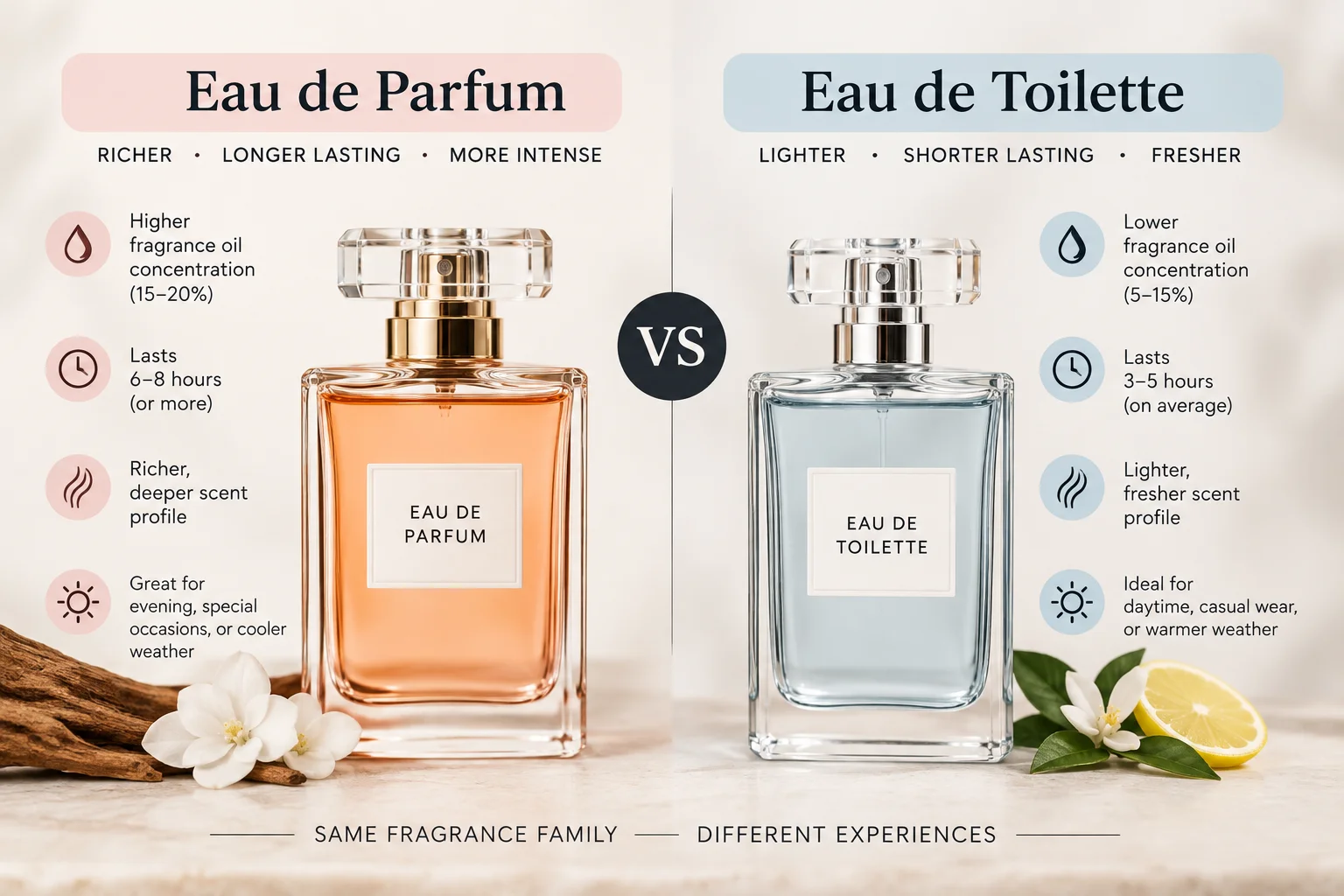
Eau de Parfum and Eau de Toilette differ mainly in how much fragrance oil is dissolved into the alcohol base. Eau de Parfum (EDP) typically holds 15% to 20% oil, while Eau de Toilette (EDT) sits lower, around 5% to 15%. That difference in concentration is why EDP usually smells richer, lasts longer on skin, and costs more than the same scent sold as EDT.
The two sit inside a wider family of fragrance types — cologne, EDT, EDP, parfum, and extrait — each one a step up in strength from the last. Understanding where EDP and EDT fall on that scale makes it much easier to pick the right bottle for your skin, your climate, and how long you need a scent to last.
Eau de Toilette vs. Eau de Parfum vs. Parfum
These three terms describe three different concentration levels, not three different fragrances. Eau de Toilette is the lightest of the three, built for a fresher, more fleeting wear. Eau de Parfum sits in the middle, with enough oil to carry a scent through most of a day. Parfum (also called extrait de parfum or pure perfume) is the strongest and most concentrated, often holding 20% to 30% oil or more.
| Type | Fragrance Oil Concentration | Typical Wear Time |
|---|---|---|
| Eau de Cologne | 2%–4% | 1–2 hours |
| Eau de Toilette (EDT) | 5%–15% | 2–4 hours |
| Eau de Parfum (EDP) | 15%–20% | 4–8 hours |
| Parfum / Extrait | 20%–30%+ | 6+ hours |
These percentages are industry-standard ranges, not fixed rules every brand follows exactly. A house can call a 15% blend either an EDT or an EDP depending on how it performs on skin, so the label is a strong guide rather than a guarantee.
Eau de Parfum vs. Eau de Toilette: Price Comparison
Eau de Parfum costs more than Eau de Toilette at the same bottle size, usually by 20% to 40%, because it holds a higher concentration of fragrance oil — the single most expensive ingredient in any perfume. The gap isn’t fixed to one exact number; it varies by brand, by how rare the oils are, and by the size of the bottle.
| Size | Typical EDT Price Range | Typical EDP Price Range |
|---|---|---|
| 30 ML | $50–$110 | $70–$140 |
| 50 ML | $75–$145 | $100–$185 |
| 100 ML | $110–$200 | $150–$260 |
These ranges reflect common mid-to-premium fragrance pricing and will vary by brand. On this site, the pattern holds directly: Born in Roma Intense and Extradose, both Eau de Parfum, are priced above Eau de Toilette versions like Born in Roma For Him or Coral Fantasy at every matching size — see the full breakdown on the Valentino perfume for men and Valentino perfume for women pages.
Worth factoring in before comparing prices side by side: EDP lasts longer per application, so you typically use less of it over the life of the bottle than you would an EDT. That narrows the real cost difference once you account for how much product actually gets used, even though the sticker price on the shelf favors EDT.
Which Lasts Longer: EDP or EDT?
Eau de Parfum lasts longer than Eau de Toilette. The higher oil content in EDP slows down evaporation, so the scent stays detectable on skin for more hours per application. An EDT applied in the morning often fades by early afternoon, especially in warm weather, while an EDP from the same fragrance line can still be noticeable into the evening.
Skin type changes this more than people expect. Dry skin holds fragrance for less time than oily skin, no matter the concentration, so an EDP on dry skin might wear closer to what you’d expect from an EDT. The individual notes matter too — a woody or musky EDT can sometimes outlast a floral or citrus EDP, since heavier molecules cling to skin longer regardless of concentration.
Eau de Parfum vs. Eau de Toilette: Which Is Better?
Neither is better overall — the right choice depends on the occasion, the climate, and how strong you want to smell. Eau de Toilette suits daytime wear and warm weather, since its lighter sillage (scent trail) feels less overwhelming in the heat and its shorter lifespan matches a typical workday without needing to be toned down. Eau de Parfum suits cooler weather and evening wear, where a longer-lasting, more noticeable scent has room to develop instead of fading early.

If you’re testing a new fragrance line, starting with the EDT version is often the cheaper way to confirm you like the notes before spending more on an EDP bottle.
How Perfume and Elixir Compare to EDP and EDT
Perfume (or parfum) sits above EDP on the concentration scale, typically 20% to 30% oil, making it the most concentrated mainstream option after extrait. Elixir, a term some brands use for their strongest or most intense release within a fragrance family, usually sits at or above EDP strength too, though it isn’t a standardized industry term the way EDP and EDT are — one brand’s “Elixir” might be formulated differently from another’s. When you see “Elixir” on a bottle, check the listed concentration rather than assuming it automatically outranks a standard EDP.
Cologne vs. Toilette vs. Parfum
“Cologne” causes the most confusion of any term on this list, because in everyday American English it’s used loosely to mean any men’s fragrance, regardless of its actual concentration. Technically, Eau de Cologne is the lightest concentration on the scale — around 2% to 4% oil — originally built for a quick, refreshing splash rather than long-lasting wear. So a bottle marketed as a men’s “cologne” might actually be an Eau de Toilette or even an Eau de Parfum once you check the fine print on the box.
Does Concentration Affect Price?
Yes. A higher fragrance oil concentration means more of the expensive raw material — the oil itself — is packed into each bottle, which is the main reason EDP costs more than EDT at the same size. The cost gap narrows in real use, though: because EDP lasts longer per spray, you typically use less of it over time, so the price difference per wear ends up smaller than the price difference per bottle.
EDP and EDT vs. Body Mist
A body mist is a different product category entirely, not another rung on the EDP/EDT concentration ladder. Body mists typically hold under 3% fragrance oil, often in a water base rather than the alcohol base used in EDT, EDP, and parfum. That makes them far lighter and shorter-lasting — usually under an hour — and generally cheaper, since they’re built for a quick refresh rather than all-day wear. If you’re comparing an EDT to a body mist expecting similar performance, expect the EDT to project more and last noticeably longer.
FAQs
Is Eau de Parfum stronger than Eau de Toilette?
Yes. EDP typically holds 15% to 20% fragrance oil, compared to 5% to 15% in EDT, which makes it smell stronger and last longer on skin.
What lasts longer, EDP or EDT?
EDP generally lasts longer — often 4 to 8 hours versus 2 to 4 hours for EDT — though skin type and the specific notes in a fragrance can shift this either way.
Is Eau de Parfum better than Eau de Toilette?
Neither is universally better. EDT suits daytime and warm weather; EDP suits evenings and cooler weather, where a stronger, longer-lasting scent is more welcome.
What is Elixir compared to Eau de Parfum?
Elixir usually indicates a brand’s strongest or most intense version within a fragrance line, often at or above EDP concentration, but it isn’t a standardized term — check the listed percentage rather than assuming by name alone.
Is cologne the same as Eau de Toilette?
Not technically. Eau de Cologne is a lighter concentration (around 2% to 4% oil) than EDT (5% to 15%), though the word “cologne” is often used casually to mean any men’s fragrance regardless of actual strength.
Why does Eau de Parfum cost more than Eau de Toilette?
EDP contains a higher concentration of fragrance oil, the most expensive ingredient in a perfume’s formula, which is why it’s typically priced above EDT at the same bottle size.
Is a body mist the same as Eau de Toilette?
No. Body mists hold a much lower fragrance concentration, often under 3%, and are usually water-based rather than alcohol-based, making them lighter and shorter-lasting than EDT.
Bottom Line
The difference between Eau de Parfum and Eau de Toilette comes down to fragrance oil concentration — EDP runs richer and longer-lasting at 15% to 20% oil, while EDT runs lighter and fresher at 5% to 15%. Neither sits at the extremes of the fragrance scale: cologne is lighter than both, parfum and extrait are stronger than both, and body mist isn’t on the same alcohol-based scale at all. Choosing between EDP and EDT really comes down to the weather, the occasion, and how long you need the scent to carry — not which one is objectively superior.


2 Comments